
With more unpredictable weather on the way this summer, communities will be expected to make more critical decisions on the fly to keep their families safe. Expected to process more information from more sources than ever, the user experience provided by councils can be the ultimate difference in life-threatening circumstances. This makes it the perfect time to ask what localisation can do your your constituents.
Crises never arrive at a convenient time.
El Niño is set to wreak wild and unpredictable weather patterns around the globe in the coming months, with high likelihoods of both fires and floods around Australia throughout the summer.
Emergency Management teams around the country will be preparing to keep the community informed and safe, and with volatility guaranteed, the updates will come in quickly.
This makes it a critical time for councils to ensure their community engagement plans are agile and accurate.
This month we’re breaking down six reasons councils should localise emergency management comms with an emergency management dashboard.
1. Give your community a single source of truth.
Emergencies require fast and seamless coordination between a range of local, state, federal and volunteer resources. The result is a fragmented stream of information for residents, who may find themselves toggling between the CFA, road authorities, police, fire, utilities,local government, and more.
Emergency dashboards allow councils to automatically aggregate all relevant information into a single experience, or manually add or filter new information as it emerges, ensuring your community is able to act as fast as possible.
See live dashboards for The Rural City of Murray Bridge and The City of Bendigo.
2. Locals are the most qualified to know what locals need.
In a world of data, more information isn’t always the answer. When it comes to navigating an emergency safely, the question is often which information is most helpful.
As members of your local community, councils are uniquely equipped to customise dashboards with the information locals need.
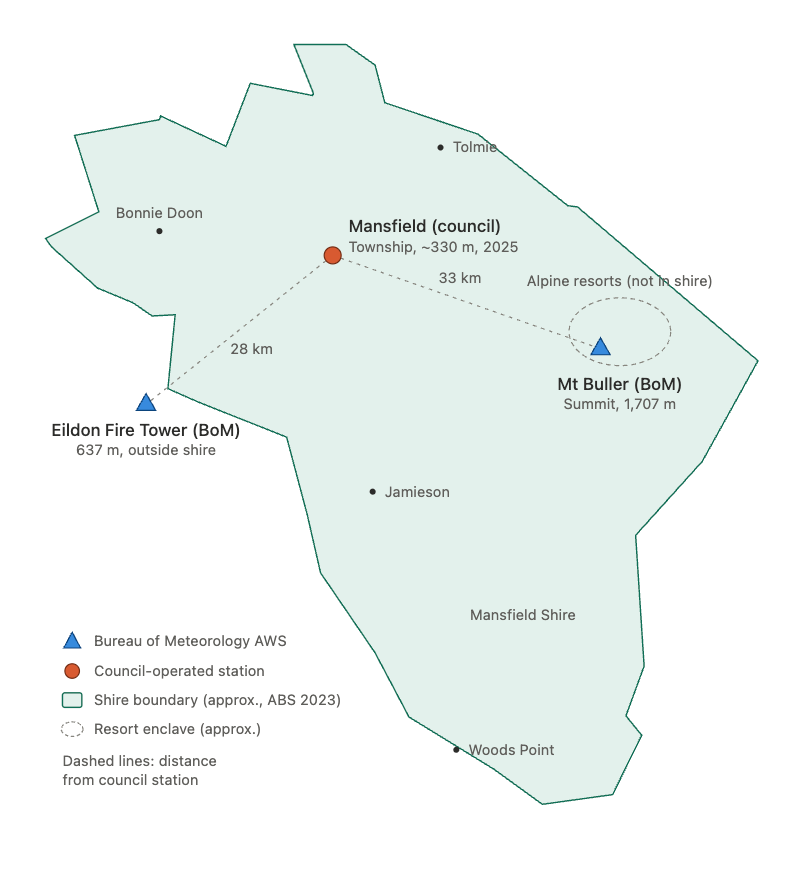
For example, in Mansfield Shire Council, two different weather stations produced two different sources of truth. While the federally operated BoM station produced readings for Mansfield during bushfires, the locally operated weather station several kilometers away produced drastically different readings that would change a course of response during the fire.
Mansfield were able to ensure their dashboard always utilized local weather stations to avoid confusion and its potentially severe consequences.
3. Don't rely on third parties to issue urgent news.
Time is of the essence in an emergency, and local teams shouldn’t have to wait for other agencies to share information that affects their community now.
Road closures are a regular example of this, where state authorities may take several hours to make an announcement, by which point many residents have already been affected.
Central Goldfields Shire circumnavigated this delay by updating their dashboard within 5 minutes of a closure, and even adding a banner to the top of the page to ensure visitors were made aware.
4. Reduce load from customer service and emergency management staff.
Confused residents are more likely to contact council with emergency questions or requests, placing additional stress on staff during an already stressful period.
Allowing the community to easily self-serve keeps your lines open for the most pressing matters, and improves overall local government efficiency.
5. Prevent reputational damage and generate positive PR.
Emergencies are a stressful time for everyone involved, and emotions run high when lives and livelihoods are at risk. When all is said and done, questions are inevitably asked about who did their part, and how responses were conducted.
Ensuring your community has real-time access to relevant information demonstrates the council is taking El Niño seriously and offering residents the most timely resources.
Positive local government action also has the potential to general positive PR for the organisation. For example, The City of Bendigo were covered by WIN News Bendigo during the launch of their dashboard, which subsequently proved incredibly important during subsequent fires.
6. Implementation is faster and less costly than you think.
With fire season fast approaching, we can get your own emergency dashboard up and running within a week. Our open source approach to web building, combined with knowledge sharing across the public sector, means we can use our existing experience to implement quickly and cost effectively for more councils.
Book a demo today to get yours.
Webinar
Local dashboards for local needs: how councils are giving residents the updates they need most during El N!ino.