
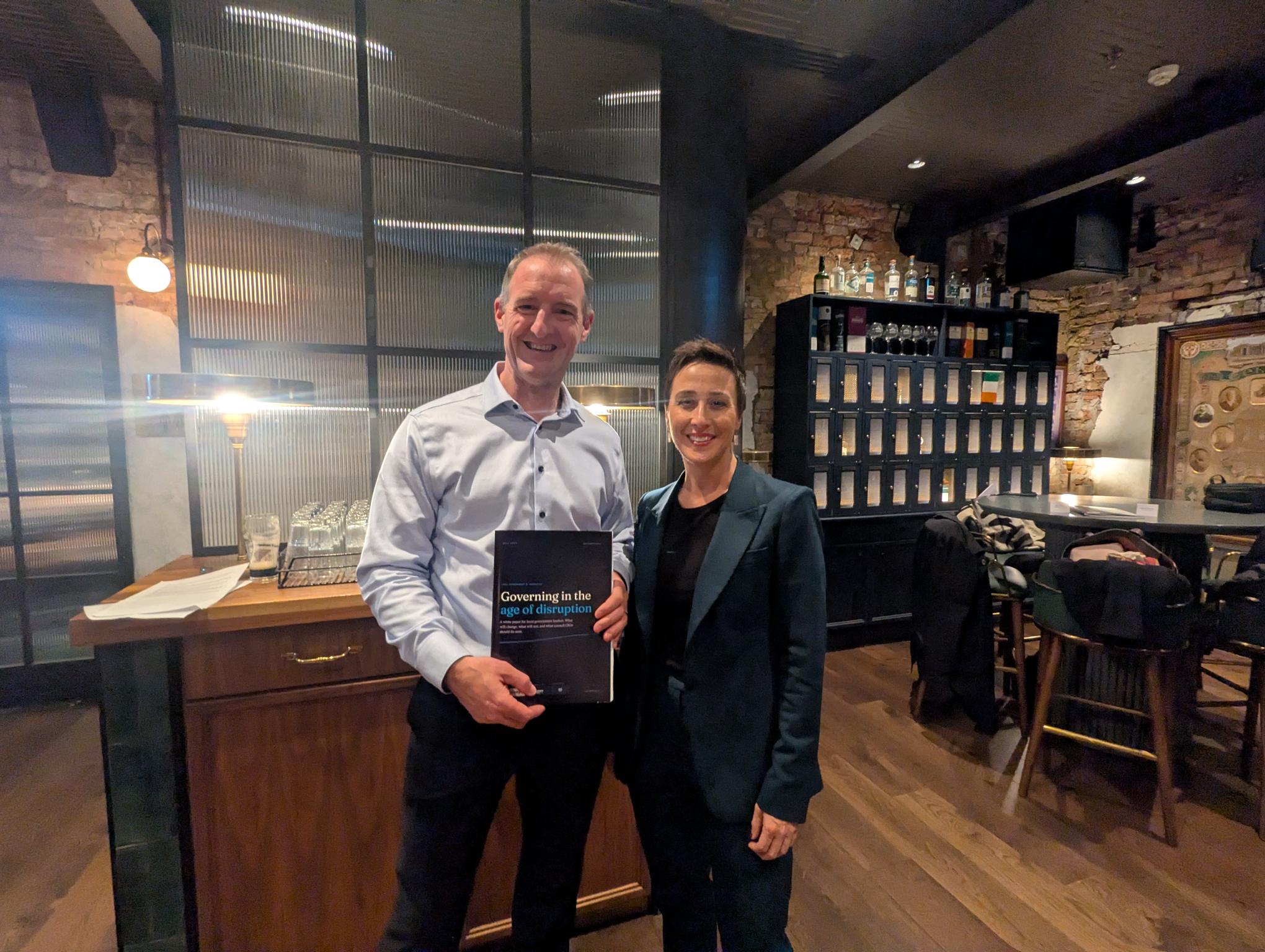
Launch of Governing in the Age of Disruption
Councils are being asked to adopt AI faster than anyone has worked out how to govern it. Ratepayers expect the convenience they get everywhere else. Staff are already using the tools, sanctioned or not. Budgets are not growing to match. And the leaders who will come through this well are not the ones who automate the most, but the ones who decide, deliberately, what stays human.
That is the question at the heart of Governing in the Age of Disruption, the whitepaper Symphony3 and LGPro launched on Thursday 3 September, with the support of AWS. It is also why more than thirty senior leaders gave up an evening to be in the room: CEOs and executives from councils as different as Warrnambool, Murrindindi, Glen Eira and Knox, alongside Symphony3 partners and the contributors from business, academia and government who helped shape the paper.
What the sector is telling us
Symphony3 Commercial Manager Alana Napoli hosted the evening, and LGPro CEO Jill Brown opened it with findings from LGPro’s recent study of AI in Victorian councils. Two stood out.
74% of council staff already use AI tools at least occasionally, yet only 65% of councils have a formal AI policy or endorsed guidelines in place. When asked what was holding them back, the top barrier respondents named was concern about data privacy and security, ahead of distrust in the accuracy of AI outputs and a preference to work without AI tools. Read the full LGPro Secor Baseline Report 2026.
The gap those numbers describe, between how fast AI is arriving and how ready councils feel to govern it, is exactly the gap the whitepaper sets out to close.
A view from Spring Street
Jill then introduced the evening’s special guest, the Hon. Gabrielle Williams MP, Deputy Premier of Victoria. The Deputy Premier spoke under the Chatham House Rule, so we won’t report her remarks here, but we can say the room heard a candid and considered view of how the State is thinking about AI, and about the decade of change ahead for the public sector. It set the tone for the conversation that followed: this is not a technology problem to be delegated to IT, it is a leadership problem.
Why we wrote it, and why we disrupted ourselves first
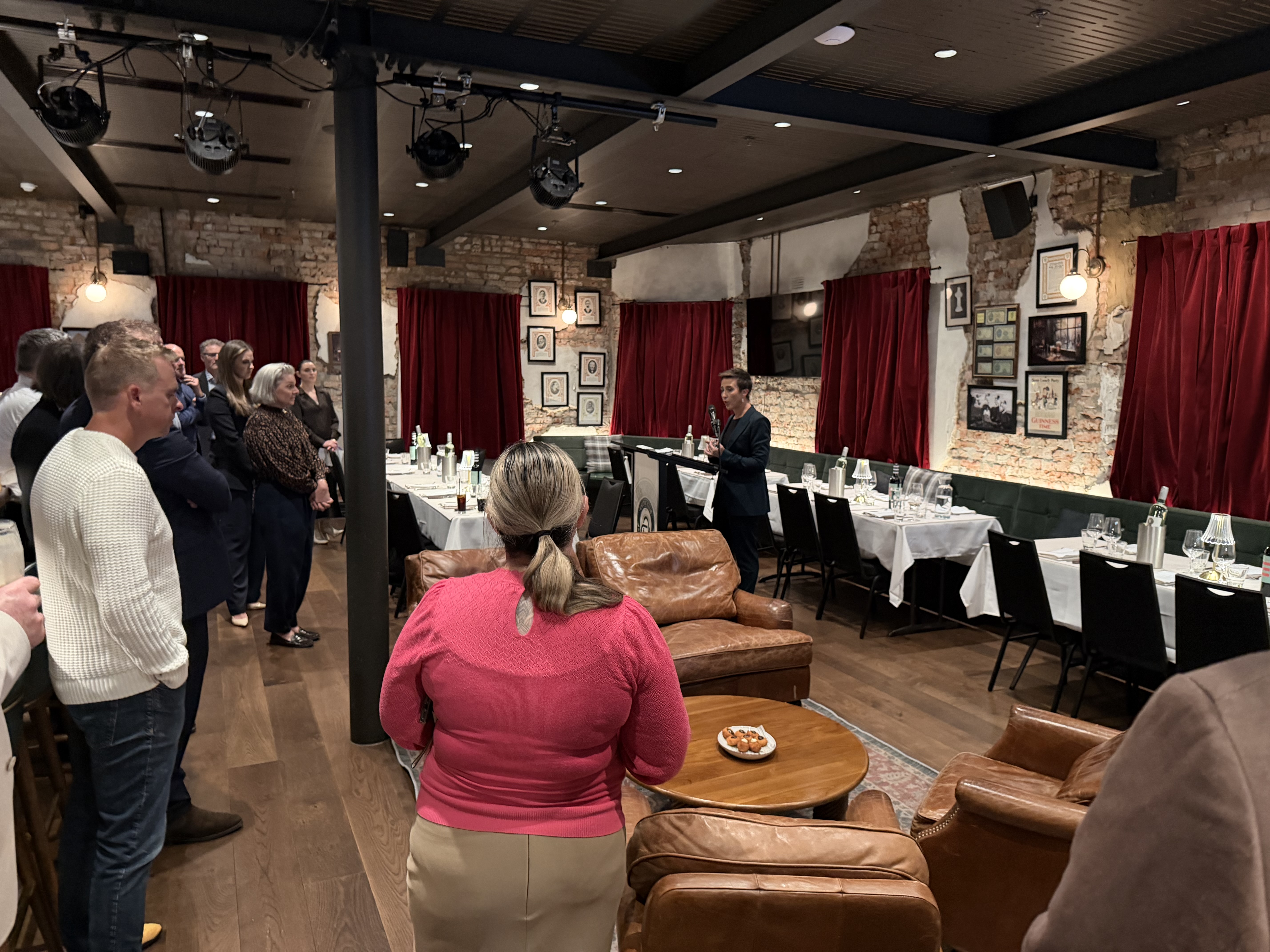
Symphony3 Co-founder Fergal Coleman then launched the paper. It grew out of the AI work Symphony3 has been doing with councils over the past two years, from integration to agents that take real work off officers’ desks, and out of a decision the company made six months ago: to disrupt its own business before someone else did, and rebuild as an AI-first organisation.
That meant changing how we sell, how we deliver, how we staff projects and how we price them. It was uncomfortable, and it is not finished. But it gave us something a vendor rarely has when it talks to councils about transformation: the experience of having just gone through one. The whitepaper distils what we learned, what we heard from council CEOs, and what the data says about where the sector’s leaders are focusing.
Wisdom in the age of AI
The evening’s keynote came from Professor Ronan McDonald of the University of Melbourne, whose talk on Wisdom in the Age of AI made an argument that landed hard with a room full of decision-makers: as AI gets more capable, human judgement becomes more important, not less. The machine can generate options, summaries and recommendations at a scale no organisation could before. What it cannot do is decide what matters, or carry the responsibility when it goes wrong.
He left the audience with five questions every leader should be able to answer for their organisation:
- What to automate. Which decisions and tasks are routine enough, and low-stakes enough, to hand over entirely?
- What to question. Where should AI’s output be treated as a draft to be challenged rather than an answer to be accepted?
- What to explain. Which decisions must remain explainable to the community, the council and the regulator, and in plain language?
- What to escalate. When does a case leave the automated path and land in front of a person?
- Who remains accountable. Because someone always does, and it is never the model.
They are simple questions to ask and hard ones to answer.
Ronan’s talk is available as a recorded webinar: watch it here.
A new kind of partnership
To close the formal part of the evening, Symphony3 CEO Thomas Hynes invited Ryan Carters, CEO of Dadfit, to the stage and welcomed Dadfit as Symphony3’s first Community Partner. The Community Partner programme is our commitment to putting some of what we build back into the communities our council clients serve, and Dadfit’s work supporting fathers’ health and connection is where we wanted to start.
Read more about the partnership.
Then dinner, and the part of the night we won't write up: thirty leaders from different organisations comparing notes and experiences.
Start with questions
If you lead a council, or advise one, the five questions above are a good afternoon’s work with your executive team. The whitepaper is there to help with the answers: what other CEOs are prioritising, what the data says, and what we learned by disrupting ourselves.
Download Governing in the Age of Disruption
Governing in the Age of Disruption was produced by Symphony3 in partnership with LGPro and with the support of AWS. Our thanks to the Deputy Premier, Professor McDonald, Jill Brown and the LGPro team, our contributors, and every council leader who joined us.
Governing in the Age of Disruption: Whitepaper
Governing in the Age of Disruption is available now. Click the button to download your copy today!